
 Login
Login- Understanding Zero-Shot and Few-Shot Learning
- The Rationale Behind the Rise
- Applications in Various Fields
- Challenges Ahead
- The Future of Learning Paradigms
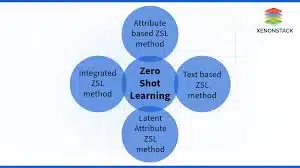
In recent years, the fields of artificial intelligence (AI) and machine learning (ML) have seen the emergence of innovative approaches that are transforming how models learn from data. Among these, zero-shot and few-shot learning techniques are gaining significant traction across various applications, pushing the boundaries of what is achievable with traditional model training methods.
Understanding Zero-Shot and Few-Shot Learning
Zero-Shot Learning (ZSL) refers to the ability of an AI model to recognize and classify data that it has never seen during training. This approach relies on leveraging existing knowledge about relationships among categories to make informed predictions about new, unseen categories. For example, if a model is trained on images of cats and dogs, it can infer the characteristics of a horse even if it has never encountered one, based solely on its understanding of common animal traits.
On the other hand, Few-Shot Learning (FSL) deals with scenarios where a model is trained with only a handful of examples – sometimes as few as one example – per class. This method is particularly useful in situations where gathering a large dataset is impractical or expensive. Few-shot learning employs various techniques, such as meta-learning and transfer learning, to enhance the model’s ability to generalize from limited data.
The Rationale Behind the Rise
The growing interest in these learning methodologies can be attributed to several key factors:
-
Data Scarcity: In many real-world applications, acquiring labeled data is challenging. Industries like healthcare and finance often deal with rare events or anomalies, making it difficult to obtain sufficient training samples. Zero-shot and few-shot learning alleviate this issue by requiring minimal data to achieve reliable performance.
-
Cost Efficiency: Collecting and annotating data is not only time-consuming but also costly. By reducing the reliance on extensive datasets, organizations can save on both time and resources, allowing them to focus on other critical areas of development.
-
Flexibility and Adaptability: As businesses pivot towards AI-driven solutions, the ability to quickly adapt to new tasks without extensive retraining has become vital. Zero-shot and few-shot learning enable models to adjust and generalize to new problems swiftly, making them ideal for dynamic environments.
Applications in Various Fields
The application potential of these learning strategies is vast and diverse:
-
Healthcare: In medical imaging, zero-shot learning can be used to detect rare diseases that have limited training data available, enabling quicker diagnosis and treatment plans.
-
Natural Language Processing (NLP): Few-shot learning is gaining popularity in NLP tasks, such as sentiment analysis and translation, where annotated corpora might be limited or difficult to obtain. Models can utilize prior knowledge of language patterns to perform effectively even with sparse examples.
-
Computer Vision: In image recognition tasks, employing few-shot techniques allows models to identify new object classes with minimal examples, streamlining the model development process.
Challenges Ahead
Despite the promising advancements, challenges remain. One major hurdle is ensuring the robustness and reliability of models trained under these paradigms. Models can exhibit biases when extrapolating from limited data, leading to inaccurate predictions. Researchers continue to explore strategies for improving the quality of learning, including better feature representation and model architecture innovations.
The Future of Learning Paradigms
The increasing sophistication of zero-shot and few-shot learning indicates a significant shift in how AI systems are developed. As techniques evolve, we can expect more robust solutions that push boundaries, leading to greater efficiency and practicality in various sectors.
For businesses looking to harness the power of AI, emphasizing zero-shot and few-shot learning could make a difference in driving innovation and maintaining a competitive edge. The capability to build intelligent systems that thrive on minimal data represents a significant leap forward in artificial intelligence.
In conclusion, as organizations adapt to a data-driven world, mastering these learning techniques will be critical. The potential to create AI models that require less data without sacrificing performance could revolutionize how industries operate, making zero-shot and few-shot learning paradigms essential tools for the future.


