
 Login
Login- Understanding Neuro-Symbolic AI
- What is Neuro-Symbolic AI?
- The Need for Integration
- Key Components of Neuro-Symbolic AI
- Neural Networks
- Symbolic Reasoning
- Bridging the Gap
- Applications of Neuro-Symbolic AI
- Natural Language Processing
- Robotics
- Healthcare
- Challenges and Future Directions
- Conclusion
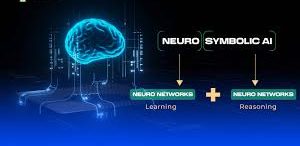
Understanding Neuro-Symbolic AI
In recent years, artificial intelligence has rapidly evolved, branching into diverse methodologies. Among these, neuro-symbolic AI stands out as a hybrid approach that marries the strengths of neural networks with symbolic reasoning. This combination aims to enhance the interpretability and generalization of AI systems, drawing interest from researchers and technologists alike.
What is Neuro-Symbolic AI?
At its core, neuro-symbolic AI seeks to integrate the statistical learning capabilities of neural networks with the structured reasoning ability of symbolic AI. Neural networks excel in processing large volumes of unstructured data, recognizing patterns, and making predictions. In contrast, symbolic AI focuses on manipulating explicit representations of knowledge and rules, allowing for logical reasoning and inference.
The Need for Integration
The necessity for a convergence of these two paradigms stems from the limitations inherent in traditional AI approaches. Purely neural models often operate as black boxes, making it challenging to decipher their decision-making processes. On the other hand, symbolic systems can struggle to scale with complex, real-world data. By combining these methodologies, neuro-symbolic AI aims to produce systems that not only learn from data but also reason and make informed decisions based on that knowledge.
Key Components of Neuro-Symbolic AI
Neural Networks
Neural networks are inspired by the human brain’s structure, consisting of interconnected nodes, or neurons, that process input data. These models are particularly effective in tasks like image and speech recognition, where they can learn intricate patterns from vast datasets without requiring explicit programming.
Symbolic Reasoning
Symbolic reasoning relies on high-level representations of knowledge, using formal rules and logic. This allows systems to engage in complex reasoning tasks, such as planning, problem-solving, and natural language understanding. Symbolic systems are particularly valuable in domains that require clear and interpretable logic, such as legal reasoning or medical diagnostics.
Bridging the Gap
The integration of these components is typically achieved through various architectures that can leverage both neural and symbolic strengths. For instance, some approaches involve neural networks generating hypotheses that are then validated or refined using symbolic reasoning. Others focus on encoding symbolic knowledge into neural frameworks, allowing these systems to navigate new information while retaining their logical foundations.
Applications of Neuro-Symbolic AI
Neuro-symbolic AI holds promise across numerous domains. Here are a few notable applications:
Natural Language Processing
In natural language processing (NLP), combining learning from vast textual datasets with symbolic reasoning enhances a system’s ability to understand context, infer meanings, and respond logically. This could revolutionize chatbots and virtual assistants, making their interactions more coherent and contextually aware.
Robotics
Robots equipped with neuro-symbolic AI can benefit from improved decision-making capabilities. The ability to process sensory input through neural networks and apply logic for planning and execution allows robots to perform complex tasks in dynamic environments, such as autonomous driving or industrial automation.
Healthcare
In healthcare, neuro-symbolic frameworks can synthesize information from clinical data, medical literature, and guidelines. This capability can aid in diagnostics and treatment planning, where reasoning over symbolic knowledge can complement pattern recognition from patient data, ultimately improving outcomes.
Challenges and Future Directions
Despite its potential, neuro-symbolic AI faces several challenges. One significant hurdle is the seamless integration of neural and symbolic components, as finding efficient methods to combine different representations and reasoning approaches is complex. Additionally, ensuring robustness and generalizability in real-world applications is critical for widespread adoption.
Looking forward, researchers are likely to focus on developing more sophisticated frameworks that can adaptively blend learning and reasoning. As computational capabilities grow and more interdisciplinary research emerges, the future of neuro-symbolic AI holds the promise of powerful systems that can think and learn in ways that closely mimic human cognition.
Conclusion
Neuro-symbolic AI represents a significant stride toward creating robust, interpretable, and versatile artificial intelligence systems. By uniting the best of both neural learning and symbolic reasoning, this approach has the potential to address some of the most pressing challenges faced by contemporary AI. As research progresses, we can anticipate a new era of intelligent systems capable of not just learning but also reasoning and understanding the world around them.


