
 Login
Login- Understanding IPv4 and Its Limitations
- The Advantages of IPv6
- Transitioning to IPv6-Only Datacenters
- 1. Comprehensive Planning
- 2. Training and Development
- 3. Dual-Stack vs. IPv6-Only Implementation
- Operational Benefits of IPv6-Only Datacenters
- Challenges and Considerations
- Conclusion
As the digital landscape continues to expand, the demand for network resources has skyrocketed. One of the most significant transitions impacting this growth is the gradual shift away from IPv4 in favor of IPv6. This evolution is not merely a trend; it is an essential response to the limitations inherent in IPv4, which is now nearing its exhaustion point. The complete deprecation of IPv4 in datacenters represents a monumental shift toward more sustainable and scalable internet infrastructure, paving the way for an IPv6-only future.
Understanding IPv4 and Its Limitations
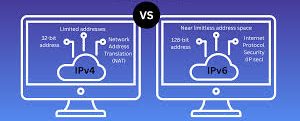
IPv4, developed in the early 1980s, provides approximately 4.3 billion unique IP addresses. Initially, this seemed more than sufficient. However, with the rise of the internet, social media, IoT devices, and mobile technology, the number of available IPv4 addresses has dwindled dramatically. Network congestion, address binding issues, and NAT (Network Address Translation) complications are some of the challenges that have arisen from this scarcity, pushing the need for a more robust addressing schema.
The Advantages of IPv6
IPv6 was developed to address the shortcomings of its predecessor. With a staggering 340 undecillion possible addresses, IPv6 provides an almost limitless supply. This immense capacity results in several advantages:
-
Simplified Addressing: IPv6 uses a hierarchical addressing structure, simplifying routing with fewer entries required on potentially overloaded routing tables.
-
Enhanced Security Features: With mandatory IPsec support, IPv6 offers better built-in security features, which are crucial for data protection in today’s online ecosystem.
-
Improved Performance: IPv6 can potentially offer faster data packets and reduced latency due to more efficient routing and better multicast support.
-
Scalability: As more devices connect to the internet, the scalability of IPv6 ensures that organizations can grow without address limitations.
Transitioning to IPv6-Only Datacenters
As industry leaders and service providers recognize the advantages of IPv6, there is a concerted shift towards IPv6-only datacenters. For organizations, transitioning involves several technical considerations:
1. Comprehensive Planning
Before making the switch, organizations must conduct an in-depth analysis of their existing network infrastructure. This includes understanding how applications function over IPv4 and developing migration strategies to ensure seamless operation on IPv6.
2. Training and Development
IT teams must be adequately trained to handle IPv6. This includes understanding its structure, how to troubleshoot potential issues, and how to optimize applications for the new protocol.
3. Dual-Stack vs. IPv6-Only Implementation
While some organizations may opt for a dual-stack environment (supporting both IPv4 and IPv6), fully embracing an IPv6-only approach offers several benefits, such as simplified management and reduced overhead costs. However, organizations with legacy systems may need to adopt a phased approach to ensure no service disruptions occur.
Operational Benefits of IPv6-Only Datacenters
Shifting to IPv6-only datacenters facilitates many operational improvements:
-
Greater Automation: Automation tools can better leverage the extensive address space of IPv6, enabling network configurations that were not previously feasible.
-
Cost Efficiency: As IPv4 address leasing can be costly, moving to an IPv6-only environment reduces expenses associated with maintaining dual-stack support, thus lowering total cost of ownership.
-
Future-Proofing Infrastructure: By moving to an IPv6-only model, datacenters position themselves as forward-thinking and ready for upcoming technological demands.
Challenges and Considerations
Despite the clear benefits, transitioning to IPv6 is not without challenges. Existing legacy systems, IPv4 dependencies, and potential incompatibilities pose risks that need careful management. Additionally, organizations must consider the impact on end-users, ensuring that services remain uninterrupted during the transition. Education and communication play key roles in easing this shift.
Conclusion
The complete deprecation of IPv4 is not simply a technical upgrade; it is a fundamental reconfiguration of how we connect, interact, and build the digital ecosystem. As organizations move toward IPv6-only datacenters, they not only enhance their operational capabilities but also contribute to a more sustainable and expansive internet. The future of networking is bright, and embracing IPv6 is the key to unlocking its full potential.


