
 Login
Login- Understanding Explainable AI
- The Need for Transparency
- Key Concepts in Explainable AI
- Techniques for Explainable AI
- Real-World Applications
- Challenges Ahead
- The Future of XAI
Understanding Explainable AI
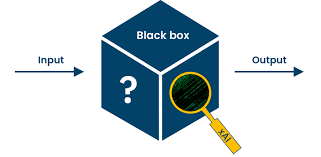
Artificial intelligence has permeated various sectors, driving innovation and efficiency. However, as algorithms become more sophisticated, a significant challenge emerges: understanding how these AI models arrive at their decisions. The term “black box” refers to AI systems whose internal workings remain opaque, making it difficult for users to interpret their outputs. This lack of transparency raises concerns about trust, accountability, and bias, prompting the rise of Explainable AI (XAI).
The Need for Transparency
At the heart of XAI lies the need for transparency in AI decision-making processes. Many users depend on AI systems for critical applications, from medical diagnoses to legal judgments. If an algorithm suggests a diagnosis or a sentence recommendation, understanding the rationale behind these suggestions is crucial. XAI aims to demystify the black box, shedding light on how models function and ensuring that outcomes are not only accurate but also explainable.
Key Concepts in Explainable AI
-
Interpretability: This refers to how well humans can comprehend the cause of a decision made by an AI model. In simpler models, such as linear regressions, interpretability is typically high. However, deep learning models often present challenges that require advanced techniques to achieve similar levels of clarity.
-
Transparency: This involves making the AI model’s processes clear to users. Techniques like model distillation simplify complex models, making them more understandable, while providing comparable performance levels.
-
Ethical Implications: With the growing concern over algorithmic bias and ethical AI usage, XAI promotes fairness by allowing stakeholders to identify and mitigate bias in AI outcomes. Being able to explain how models reach decisions can help ensure that they align with ethical standards.
Techniques for Explainable AI
Several techniques are employed to interpret and explain the functioning of AI systems:
-
Model-Agnostic Approaches: These methods, such as LIME (Local Interpretable Model-agnostic Explanations) and SHAP (SHapley Additive exPlanations), can be applied to any machine learning model. They provide local explanations by approximating the model’s behavior in the vicinity of a particular prediction.
-
Visualization: Data visualizations can help users understand model behavior. Visual tools that map out features can reveal how specific inputs affect outputs, offering insights into the decision-making process.
-
Feature Importance: By showcasing which features contributed most to a prediction, these techniques underscore the driving factors behind AI decisions. This can help in identifying potential biases or unexpected reliance on certain data points.
Real-World Applications
Explainable AI is finding applications across various fields:
-
Healthcare: In medical settings, AI is increasingly used for diagnostic purposes. XAI helps clinicians understand AI recommendations, ensuring that treatment decisions are made with full comprehension of the AI’s reasoning.
-
Finance: Credit scoring models employ XAI to explain why a particular individual was approved or denied, which helps consumers understand their scores and fosters trust in financial institutions.
-
Legal Systems: In legal applications, AI tools can assist law professionals in case analysis. Explainability ensures that outcomes are justified, reducing the potential for bias and increasing the reliability of AI systems in this sensitive field.
Challenges Ahead
Despite its benefits, establishing effective XAI methods continues to face challenges. The trade-off between model complexity and interpretability can lead to situations where highly accurate models become too convoluted for straightforward explanations. Moreover, consumers may have varying levels of understanding of AI, complicating efforts to present clear explanations.
The Future of XAI
As we advance in the realm of AI, the significance of XAI is poised to grow. Regulatory frameworks may emerge that demand explainability standards, particularly in critical sectors. Ongoing research is likely to lead to more innovative methods of interpretation that will enhance both the usability and accountability of AI systems.
In summary, XAI is more than just a trend; it is a necessary evolution in the application of artificial intelligence. By unlocking the secrets of the black box, we can foster a more transparent, equitable, and effective use of AI in our society. Understanding these advancements will be crucial for stakeholders across industries, ultimately bridging the gap between technology and human comprehension.


